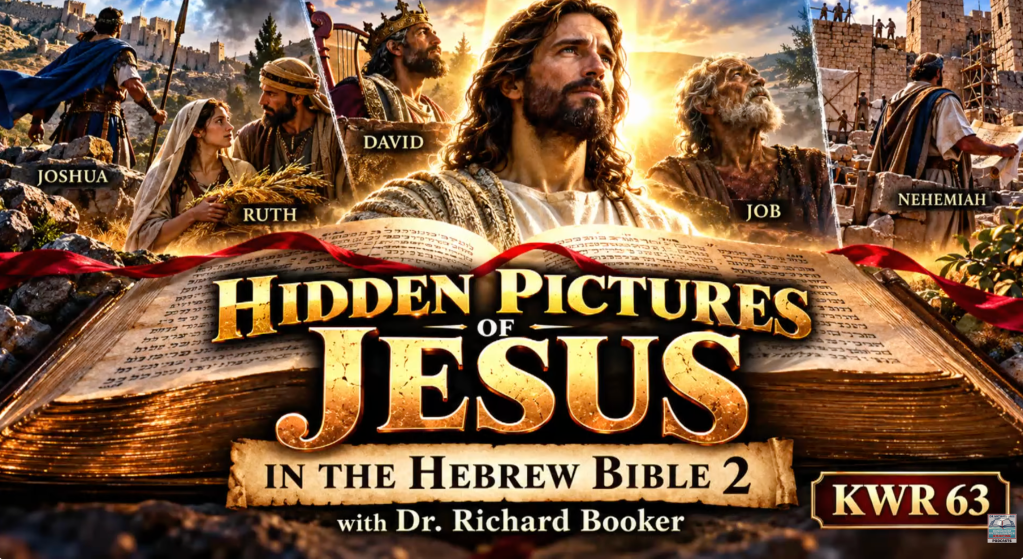
In this episode we talk with Dr. Richard Booker about his new book: Hidden Pictures of Jesus in the Hebrew Bible vol 2. In this book, Dr, Booker examines First Testament Scripture pointing to Jesus.
Put on then, as God’s chosen ones, holy and beloved, compassionate hearts, kindness, humility, meekness, and patience, bearing with one another and, if one has a complaint against another, forgiving each other; as the Lord has forgiven you, so you also must forgive. And above all these put on love, which binds everything together in perfect harmony. And let the peace of Christ rule in your hearts, to which indeed you were called in one body. And be thankful. (Colossians 3:12-15 ESV)
In part one of this article, I wrote on the peace of Jesus providing hope even in the midst of trial. It is His peace that gives us the strength to endure. Such peace is not defined according to human knowledge. The peace of Jesus is found in His presence, protection and promises. As we trust in Him, the peace which surpasses human understanding will guard our heart (Philippians 4:7).
The reception of such peace comes through our declaration of faith. It is in Jesus where we can find salvation and peace with the Almighty. In our salvation, the Apostle Paul encourages us to allow the peace of Jesus to rule our heart. The response of a disciple of Jesus is to allow the King to rightfully be seated upon His throne in our heart. What does it mean to allow something to rule in our heart? To answer this question, I turn to the prophet Isaiah. In chapter twenty-six, Isaiah reveals the hope for the people who look to the Lord to strength. It is the Lord who has brought strength to His people. Under the covering of His provision the people find security. In verses three and four, the Lord gives us instruction on our response as His people.
“3 “The steadfast of mind You will keep in perfect peace, Because he trusts in You. 4 “Trust in the Lord forever, For in God the Lord, we have an everlasting Rock (Isaiah 26:3-4 NASB95).”
The Lord reminds us that our minds must be steadfast. In the English the term steadfast connotes the notion of being determined, fixed and unchanged in the sense of personal efforts. While we must remain resolute in our faith to follow our Messiah, we know that we can only persevere as we lean upon the Lord for help. As we lean on the Lord, He will build us up according to His will (Romans 5:1-8). It is this idea that comes a bit closer to what we are to glean from the instruction given in Isaiah 26:3. The term steadfast is translated from the Hebrew word סָמַךְ (H5564- saw-mak’). This word means to lean, lay, rest, be upheld, lean upon. Our determination to remain steadfast can only be upheld as we lean upon the Lord. We must recognize our desperate need for His help and we must lean upon Him as He upholds us. It is the Lord who is our everlasting Rock. The firm foundation which will never be shaken (Isaiah 26:16; Hebrews 12:28). Our trust must be focused on Him. Those who place their trust in the Rock of our faith will rest in the perfect peace of our Lord.
How then do we allow the peace of Christ rule in our heart? By remaining steadfast. Trusting in the only One who can uphold us as we lean upon Him. I pray brothers and sisters that you look to the Lord for strength (Psalm 28:6-9). Lean upon the solid Rock (Psalm 18:2). Rest upon His Word (Matthew 11:28-30). Humble yourself under His authority (James 4:10). Trust in you Savior and His presence, protection and peace will guard your heart (Philippians 4:7).
Put on then, as God’s chosen ones, holy and beloved, compassionate hearts, kindness, humility, meekness, and patience, bearing with one another and, if one has a complaint against another, forgiving each other; as the Lord has forgiven you, so you also must forgive. And above all these put on love, which binds everything together in perfect harmony. And let the peace of Christ rule in your hearts, to which indeed you were called in one body. And be thankful. (Colossians 3:12-15 ESV)
As we continue to examine the directive given by the Apostle Paul through the inspiration of the Holy Spirit, we come to the peace of Jesus. Paul reminds those who claim faith in our Savior to allow the peace of Jesus to rule in our hearts. It is faith in Jesus where we can find peace that brings hope in His authority even as we dwell in a world that can feel at times to offer everything but peace. However the people of God have hope in the presence of the Lord in our lives. The words of Jesus Himself as He gives us instruction to cling to Him. “27 Peace I leave with you; My peace I give to you; not as the world gives do I give to you. Do not let your heart be troubled, nor let it be fearful (John 14:27 NASB95).” Jesus promises to give us peace. This is not peace defined according to human understanding. Jesus offers us His peace. Jesus encourages us to not lose heart by the troubles of this world, rather dwell in the hope of His peace. The Apostle Paul defines the peace of Jesus in his letter to the church in Ephesus. Paul instructs us to “12 remember that you were at that time separate from Christ, excluded from the commonwealth of Israel, and strangers to the covenants of promise, having no hope and without God in the world. 13 But now in Christ Jesus you who formerly were far off have been brought nearby the blood of Christ. 14 For He Himself is our peace, who made both groups into one and broke down the barrier of the dividing wall (Ephesians 2:12-14 NASB95).” Jesus is our peace. He is the Only way to be reconciled to the Lord. Paul encourages us to remember that we were all at one time separated from the Lord. Cut off due to the pride of the sinful human heart. But God in His mercy has come to us. And it is in Jesus where we can be reconciled, saved and given hope. It is through Jesus that we can find peace with the Lord. No longer do we stand without hope before an Almighty God. Our faith in Jesus redeems us unto salvation. Our faith in Jesus brings us peace that transcends all understanding (Philippians 4:7). The peace we receive in Jesus is peace with the Almighty. Peace as the fruit of our faith which brings hope beyond description. It is this peace offered by Jesus. Though we may have trouble in this world, we are not to fear because we stand in covenant with our Savior and King!
Jesus is not giving us peace in the sense of being absent turmoil. He offers us His peace in the midst of turmoil. In the book of John, Jesus reminds His disciples and ultimately all those who place faith in Him of persecution that will come attempting to draw us away from the hope of His Name. Jesus warns “33 These things I have spoken to you, so that in Me you may have peace. In the world you have tribulation, but take courage; I have overcome the world (John 16:33 NASB95).” Jesus does not promise to eliminate turmoil. He does not say that faith in Him will cause us not to suffer tribulation. Nor does He promise to remove persecution that will come against those who believe. Rather Jesus reminds us of His presence with us as we go through such trials. We are to find courage knowing that we do not suffer alone. Jesus is with us. And as He is with us, He will help us to overcome. He will help us to not be overwhelmed by the trouble that may come against us. He promises to bring His peace to us in the midst of the storm (Mark 4:35-41). It is such peace that cannot be fully described by the limitations of human language. This is why resting in the peace of Jesus transcends any affliction we may suffer.
I pray, beloved of our Lord, that you look to Jesus who is the author and perfector of our faith to bring you hope in a world that can feel hopeless at times (Hebrews 12:2). He went to the cross to be put to death because of the penalty of your sin. He did this for you. You are His joy! You are loved. You are redeemed. You have hope. You can rest in His peace. Trust in Him. Turn to Him and you will find truth. AMEN!
I included the link to the newest episode of the Kingdom War Room with Dr. Michael Lake, Dr. Mike Spaulding and myself. In this episode, we discuss the dangers of Islam. We highlight the lies which found Islam. We cite examples within the political climate that have begun to support the false, oppressive teachings of Islam. We talk about the imperative for boldness within the church to stand upon the Word of God for discernment.
This blog entry was written by Mandie. Thank you Mandie for your contribution. I consider Mandie and her family as dear friends and fellow servants of the Lord. They are members of Mount Zion Road Church and most importantly, they are faithful followers of our Lord and King, Jesus Christ. I am thankful and blessed that she was willing to allow me to post this entry on my website. In this writing, Mandie uses an example from a family hike to bring insight regarding discipleship. As disciples of our Savior, Jesus, we must endeavor to keep our eyes fixed on Him. He is our hope, strength and encouragement when the trail of life gets difficult. I pray that you find her words to be a blessing as you read. To God be the glory!
In the beginning of June our family went on a hike that took us longer than we anticipated it would (3 hours!). It was an in and out trail and was advertised as 1.7 miles each way. Our goal was a promised vista or beautiful view of the forest scenery. I could not wait to go! As we soon found out, this was not going to be an easy or flat trail as we were met with a steep and rocky incline climbing up the mountain. We had a group of 10 people and so we naturally split into multiple different groups- the young legs of the 6 children with one unlucky adult (that would be my husband) leading the way. Our four year old son was in this lead group for most of the trek but he did end up farther back with me at one point. While he was hiking by me, I would stop often to catch my breath and take a break but I would almost immediately hear his sweet voice saying “Let’s keep going!” So, we did. I know, like my son, I used to not need to take breaks on hikes however that was many years ago! At an early break time, I noticed all the beautiful mountain laurel all around! I was overjoyed at this because I had always read about trails that had a lot of it but never hiked those when the flowers were in bloom. It felt like a special treat to be there! We finally caught the lead group that was in front of us, catching up to my husband. As soon as we were within earshot, I heard him calling out to our son encouragement and accolades for how good of a job he was doing hiking. I did not get those same compliments…and I know why. It was then that I realized some of my son’s determination to keep going- he wanted to get back to his father. While with me, I was focused on surviving and taking care of myself but while our son was with his dad, he was being shown love and spurred on to keep going in the same manner that he was going. Don’t we all want to be around those who encourage us? Soon, my husband and son were again out of sight and I could then take a longer break but I did miss that chipper voice encouraging me to keep going. Soon, another from our group caught up to me, my friend’s 10 year old daughter, and she sat with me to also take a break. I appreciated that she did that and did not just pass me by. We soon got up together and kept going. Along the way, we did have some moments of doubt in ourselves to make it to the top– should we turn around, is it too difficult? Is it selfish to want to make it to the goal so badly that others struggle? After all, the hike was my idea and I was definitely having second thoughts. Those are the questions I had and when voiced out loud, we needed another member of our group to encourage us to keep going when we almost turned back. We did finally make it to the top and the view was breathless! The mountains we saw seemed so close to us. I signed the trail register giving thanks to God for His incredible creativity in nature! It was then I noticed that the Department of Conservation and Natural Resources (DCNR) had been the last entry in the register and they had hiked the almost 2 miles to clear the trail for those who would come behind them.
We saw the evidence of their work in the fallen tree logs that had been cut and cleared away. I was also thankful for their hard work in doing that.
All of this reminded me of how we are to be determined to seek our heavenly Father. To keep our eyes fixed on Him always. For He is the One who will encourage us to keep going in this life that may be difficult at times – just as that hike was. Along our trail of life, we will encounter challenges that we will need take a break from, to be still, seeking God for His wisdom on how to proceed- symbolized by how I had to often take a break. Should we keep pressing on or perhaps God has a different way for us to take? Seek Him! We will be discouraged by ourselves, others or by the enemy. Doubting and forgetting to trust in our Father. Sometimes God will use others in our life to bring encouragement to us and sometimes we will encounter others who we can encourage and spur on (Hebrews 10:24-25)- as my husband did for his son and as my friend’s daughter did for me by simply stopping to sit with me along the trail. A reminder that we can give support to others by our intentional presence. God truly blesses us all when He gives us opportunities to be a blessing to others. When we go through difficult times, we should keep our eyes and ears open to God’s hand working in our lives and take time to thank Him when we recognize it- symbolized by the mountain laurel. Those star shaped white and red flowers added color to the green forest, and God allowed them to be another encouragement to me. Lastly, we can be those who have forged a path for those who will come behind us- as that employee of DCNR did for us. Who knows how much more difficult that trail might have been had he or she not just been there. Can any of us recognize anything our relatives have done that has blessed us in our lives?
In Hebrews 11, it entails the names of the faithful men and women that God called and equipped to follow Him through whatever difficult circumstance they were in. God was with them. Abraham, Isaac, Jacob, Joseph, Moses, Rahab, Gideon, Barak, Samson, Jephthah, and David are all listed. Not only in the difficult circumstances themselves but those listed in that chapter faced their own sinful nature that held them back from full trust in God- sins such as doubt, being deceitful, fear, pride, or lust. But praise be to God that they also had characteristics that God placed in them, for His glory, and He helped them to walk in His nature. Characteristics such as faith, obedience, humility, courage, patience, kindness, and trust. Hebrews 12 verses 1 and 2 say this:
“Therefore, since we have so great a cloud of witnesses surrounding us, let us also lay aside every encumbrance and the sin which so easily entangles us, and let us run with endurance the race that is set before us, fixing our eyes on Jesus, the author and perfecter of faith, who for the joy set before Him endured the cross, despising the shame, and has sat down at the right hand of the throne of God.”
The “sin that so easily entangles” us may not be the same one that easily entangles another brother or sister in Christ. We all struggle so differently based upon how we have been created. We can not truly know what another person is going through when they are facing a challenge in their life. Not only the challenge itself but their own personal struggle to keep focusing on our Father. Something that may seem like “no big deal” to us may seem like an insurmountable difficulty for someone else. What we can do is pray- pray for God to give them strength to endure, to show them His mercy, to surround them with godly influences- people who will point them to Him for counsel and comfort and we can ask God to show us ways in which we can come alongside Him in His care of them. I give God the glory for the seemingly random thoughts that I have that are related to how I can encourage and build-up a fellow brother or sister in Christ. I may not even know they are struggling but God knows. He cares so deeply for us! Thank you for the ways in which you may already be listening to the Holy Spirit’s promptings to be an encouragement to others. May you be blessed as you bless others along this trail of life we are on together!
– Mandie
By the way, if you find yourself in the beautiful Pine Creek Valley and are looking for a challenging hike – this was the Bob Webber Trail near Cammal, Pennsylvania and my family jokes that I am banned from choosing hikes (at least until they forget this experience).
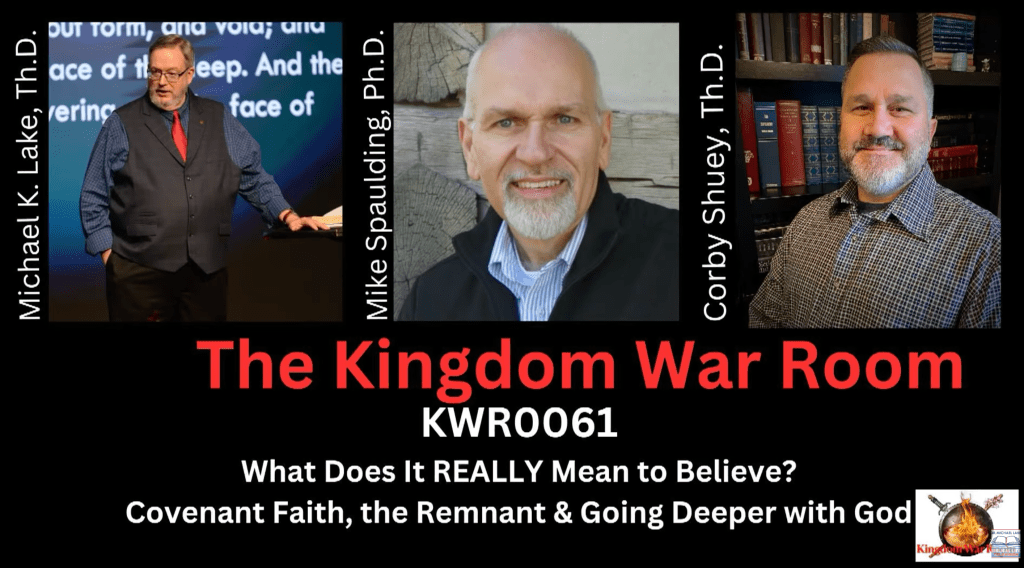
Latest episode of Kingdom War Room with Dr. Lake, Dr. Spaulding and myself. In this episode we discuss what it means to believe and we examine the discernment needed to equip us to persevere in our day.
What Does It REALLY Mean to Believe? – Covenant Faith, the Remnant & Going Deeper with God | KWR0061 Description What does it actually mean to believe in Jesus Christ? In this powerful episode of the Kingdom War Room, Dr. Michael Lake, Dr. Mike Spaulding, and Pastor Corby Shuey tackle one of the most misunderstood words in modern Christianity: belief. Starting with an exegetical study of John 3:16 from the original Greek, the discussion quickly expands into the nature of biblical faith, covenant fidelity, discipleship, repentance, and the dangerous rise of easy-believism within the modern church. The panel examines the difference between intellectual agreement and covenant commitment, why many churches have abandoned true discipleship for entertainment, and how the Holy Spirit is calling the Remnant into deeper levels of spiritual maturity and biblical literacy in these last days. Topics include the Hebrew understanding of faith, the restoration of the image of God in believers, the importance of divine visitations, biblical authority, discipleship, the dangers of pagan influence in Christianity, and practical ways believers can begin going deeper in the Word of God. This is a challenging and encouraging conversation for believers who are serious about walking in covenant faithfulness and preparing for the days ahead.
This blog entry was written by Mandie. I consider Mandie and her family as dear friends and fellow servants of the Lord. They are members of Mount Zion Road Church and most importantly, they are faithful followers of our Lord and King, Jesus Christ. I am thankful and blessed that she was willing to allow me to post this entry on my website. In this writing, Mandie encourages us to find joy in knowing the Lord in the everyday. We are encouraged to share the joy of knowing our Savior Jesus with those around us. I pray that you find her words to be a blessing as you read. To God be the glory!
I am convinced that any experience we have in life can point us to our Creator and a perspective that touches our souls. Having children, I see many examples of this every day. They can teach us so much if we only have the eyes to see and compare it to spiritual truth that God can highlight to us. Jesus used parables to teach- everyday objects and culturally significant customs to highlight His purposes and give understanding to those who belonged to Him. As Matthew 13:9 says “He who has ears, let him hear.” and further on in verse 16: “But blessed are your eyes because they see, and your ears because they hear.” A few weeks ago, when we had the unseasonably warmer days (and everyone was rejoicing!), Asher and Daniel took it upon themselves to rummage through the summer clothing that is tucked away in our storage area. The result was they found what they were looking for (that, in itself, is a mini miracle) and they were quick to change out of their warm winter garb and exuberantly put on the short-sleeved clothing. If you can, picture little Daniel strutting around the house as joyful as can be to wear, what he saw, as “new” clothing. We have been blessed abundantly by saints who have passed on their clothing to us and so, while not “new” per se, it was new to Ian and he could not have been happier in that moment. It brought a huge smile to my face! In fact, he had some tears over the next few days as I had to explain the dropping temperatures and his need to put on long-sleeved clothing again. Some of you, I am sure, can relate to that feeling he had. When I was witnessing this adorable display of Ian dancing joyfully in his “new” clothing, the concept of our being a new creation came to mind. I thought about how we are to be new creations and as Ephesians 4:22-24 says:
“You were taught, with regard to your former way of life, to put off your old self, which is being corrupted by its deceitful desires; to be made new in the attitude of your minds; and to put on the new self, created to be like God in true righteousness and holiness.”
When something is new to us, we are the most excited and joyful about it. Over time, that feeling wears off. I see it not necessarily as a problem with the item, unless it somehow broke or wore out, but I see it as a problem with our attitude towards that item. It has lost its appeal and novelty. No longer do we feel as excited about it. No longer do we think about it or tell others about it. It, whatever it is, has lost some of its value in our lives. Speaking of being a new creation in Christ, do we, who have been believers in Christ, still live as joyfully now as we did when we first came to know and believe in Him? Or has the newness, the joy worn out over time- similarly to our experience with a physical item? I thought about how this picture of simple joy by a little boy can teach us how we should be joyful in what we have that is new….our new self, or our true self!! And how much greater that joy should be because it is not a physical item that can wear out over time. As Colossians 3:1-4 says:
“Since, then, you have been raised with Christ, set your hearts on things above, where Christ is seated at the right hand of God. Set your minds on things above, not on earthly things. For you died, and your life is now hidden with Christ in God. When Christ, who is your life, appears, then you also will appear with Him in glory.”
I pray that God encourages your hearts and minds to walk in the newness of the self He intends for you to live in everyday and that the novelty of it will never wear off! May you be blessed by our Father who loves you abundantly!
This blog entry was written by Eric, a friend and fellow servant of our Lord. Eric and his family have been members of Mount Zion Road Church for many years. Most importantly however, they are faithful followers of our Lord and King, Jesus Christ. I am thankful and blessed that Eric was willing to allow me to post this entry on my website. Eric encourages us to consider the Biblical, true definition of what it is to be a man of God. I pray that you find these words to be edifying in your walk of faith. May we all serve the Lord with integrity, honor and reverence, for the glory of Jesus!
A man of God is one who believes, obeys, and follows Him in every way according to Scripture. Scripture is our ultimate authority for life, and through it, we understand what is required to become a man of God. 2 Timothy 3:16-17 explains the supreme authority of Scripture in a believer’s life, “All Scripture is breathed out by God and profitable for teaching, for reproof, for correction, and for training in righteousness, that the man of Godmay be complete, equipped for every good work.” This passage teaches us that all discipled Christian men who believe and obey the Word are deemed men of God.
1 Timothy 6:11-22 gives us an overview of the biblical characteristics of a man of God.
Through these verses, we learn that a man of God lives with:
Integrity as he flees anything to do with false teaching.
Godliness; he pursues love, righteousness, and peace according to what Jesus taught.
Righteousness. He follows the Lord’s commands and keeps himself unstained from the sins of the world.
Generosity with what the Lord has given him.
Knowledge of the Lord Jesus Christ, which makes one effective for kingdom work.
Spirit-filled direction.
What are the key traits of a Man of God?
A man of God obeys His Word with love, not living for the things of this life but for the things of eternity, willingly serving God in giving freely of his resources, and gladly suffering as a consequence of his faith. Perhaps Micah 6:8 sums up the man of God in one verse: “He has showed you, O man, what is good. And what does the Lord require of you? To act justly and to love mercy and to walk humbly with your God.”
In 1 Timothy 6:12, Paul tells Timothy to fight the good fight of faith. From this, we learn that a man of God knows the perseverance necessary to accomplish this lifelong task. The man of God knows he is lost without the Holy Spirit and relies on Him for his walk with Christ. Not by our effort or ability, but by His power and His grace. And as we trip up or fall short, we seek and allow Him to build us back up.
The good fight includes serving Christ by serving others. A man of God does not seek the approval of men but of God; therefore, as he becomes more like Christ, he serves with Christlike compassion.
A man of God is a servant-leader, as is our Lord. A man of God, by his faithful servant leadership, will provide a Christlike witness to unbelievers in his work, relationships, and life as a whole.
How does a Man of God demonstrate faith?
In Luke 11:37-54, Jesus communicated with a Pharisee who admonished Him for not following their rules for washing before a meal. Jesus responded by rebuffing the hypocrites who, “cleanse the outside of the cup and of the dish, but inside you are full of greed and wickedness” (v. 39). One lesson that can be gleaned from this interaction is that hypocrites breed hypocrites. A man of God, instead, hides nothing, for his heart is attuned to what he has been taught from Scripture and from his godly mentors. He demonstrates his faith by how his heart leads him along all paths of life.
A man of God not only guards his heart, but he also guards his time in God’s Word. His approach to Scripture includes quality, distraction-free time covered in prayer.
Prayer serves as a man of God’s most important daily communication. 1 Thessalonians 5:17 tells us to “Pray Continually”, so prayer is the first step built on Scripture’s foundation.
The foundation of Scripture study and prayer builds a man’s trust in God because, in both, the man of God gains personal knowledge of his heavenly Father and of His plans. With this solid footing, a man of God can faithfully lead others in godly living by example and by teaching. The example he displays to his family has eternal benefits as they learn from him.
How can a Man of God lead his family and in his community?
An active man of God should strive to be as godly a man as possible. He gains his greatest counsel from the Word of God and in fellowship with other godly men.
A man of God, who leads his family and in his community well, will:
Love God above all else and spend quality time in the Word and in prayer.
Love his wife as Christ loves the church and will demonstrate Christlike character in his role as husband (Ephesians 5:25).
Love his children and teach them the ways of following Christ (Proverbs 22:6).
Love his church family and serve alongside them, within the church and within their community.
Not be a workaholic. While work may be fulfilling, it should not be all-consuming of his time and energy.
Be a wise steward of God’s resources.
Be balanced in service so no one suffers a lack of his love and leadership.
Disciple young men and encourage other church members
Avoid the very appearance of evil and wrong-doing.
Seek first God’s will, wisdom, kingdom, and righteousness.
How does one grow into a Man of God?
The first action a man must take is to receive salvation by surrendering in faith and repentance to the Lord Jesus Christ. As a new believer, a man should seek a Bible-based church with which to grow in the grace and knowledge of Jesus. Without the work of Jesus and the Holy Spirit, it’s impossible for anyone to please God or be a Godly example for others.
A man of God trusts the Lord to grow him. In today’s world, a man of God stands out in bold contrast to the dominant culture which is full of false teachers. He does pretty much everything opposite to what the world does or approves of; he goes “against the grain” of society because he knows these things displease God. It’s important for a man of God to sharpen his discernment as he interacts with our culture.
He must take practical steps to deepen his faith and grow in spiritual maturity. Having a mentor, an accountability group, and immersing himself in prayer contribute to becoming a man of God.
In closing, a man of God surrenders his entire being to his Creator, centers his life around God’s word, walks in the Spirit, and upholds truth with love and courage. By trusting in Christ’s sacrifice and resurrection, he gains the power to live righteously and the assurance of eternal life. Thus, his deepest aim becomes to glorify God in everything. It should be the desire of every man of God to stand before the Lord one day and hear, “Well done, My faithful servant.”
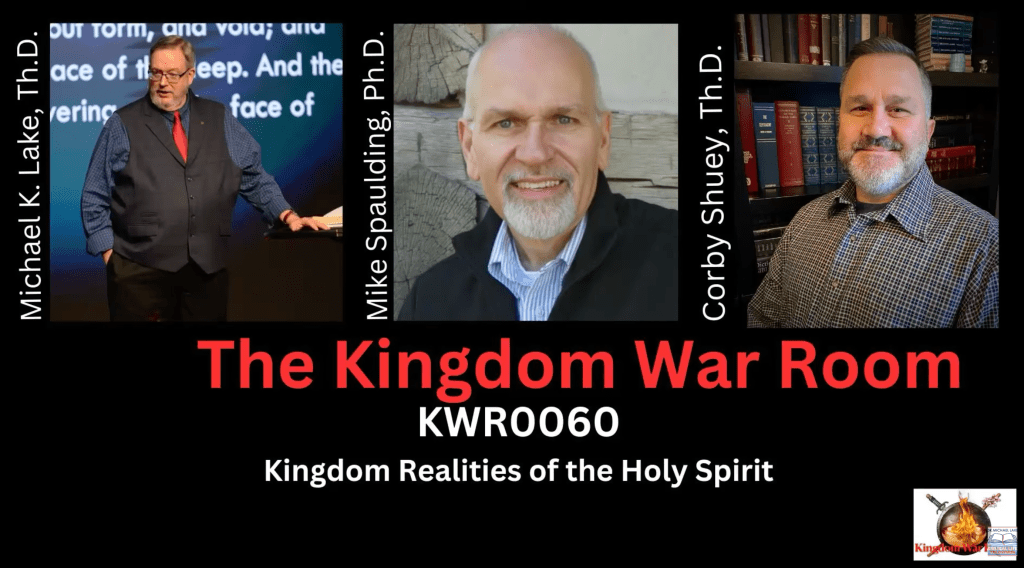
Latest episode of Kingdom War Room with Dr. Lake, Dr. Spaulding and myself. In this episode we discuss the role of the Holy Spirit in the life of a believer. We examine true discipleship as led by the Lord. I pray that you are encouraged, edified and directed in your walk of faith by our Savior Jesus.
In this powerful episode of the Kingdom War Room, Dr. Michael Lake, Dr. Mike Spaulding, and Dr. Corby Shuey confront many of the theological errors and spiritual deceptions that have infiltrated the modern charismatic movement. Together, they examine the true biblical role of the Holy Spirit, the difference between the New Birth and Spirit empowerment, the misuse of spiritual gifts, and the growing danger of counterfeit signs and wonders in the last days. The discussion moves deeply into Scripture, exposing how emotionalism, entertainment-driven Christianity, and modern mystical movements have replaced authentic discipleship and intimacy with God. The team also explores the biblical purpose of the gifts of the Spirit, the importance of the fruit of the Spirit, discernment regarding modern revival movements, and how believers can prepare spiritually for the rise of deception connected to the Antichrist system. This episode is a sobering but encouraging call for believers to return to covenant faithfulness, authentic prayer, deep study of the Word of God, and genuine intimacy with Jesus Christ through the power of the Holy Spirit. Kingdom War Room #60 challenges the remnant to move beyond hype and emotionalism into a Spirit-led life grounded in truth, holiness, discernment, and the Word of God. 📚 Topics Covered Include:
The difference between the New Birth and the baptism of the Holy Spirit
Why many modern charismatic manifestations fail biblical discernment
The danger of building doctrine on isolated Scriptures
The biblical purpose of the gifts of the Spirit
Why the fruit of the Spirit matters more than spiritual hype
False signs and wonders in the last days
The coming deception connected to the Antichrist system
Problems with entertainment-driven church culture
Why believers must return to deep Bible study and prayer
This blog was written by my wife and ministry partner, Kelly. I am blessed by the Lord to have been given a wife who is a continual support to me and my family. She has a kind heart of empathy and service. She stands alongside of me as we strive to serve our Savior and King, Jesus. May He help us to humbly follow His lead in order to proclaim the mercy, grace and love of our Messiah. I am honored to be able to share the thoughts Kelly has written with you. I pray that you are blessed and encouraged in the reading.
Dear Woman of God,
I know it’s not easy. No matter what your age, the world attempts to pull you down and shut you up. It tells you that you will never measure up, you’ll never be smart enough, pretty enough, thin enough, good enough. You’ll never be enough. Silence that nagging voice. You were created in God’s image (Genesis 1:27). He has a purpose for you (Philippians 2:13). Seek Him first (Luke 11:9). Look to His Word (Psalm 119:11, James 1:22). Live your calling with humility (Philippians 2:12). May you be encouraged by the Biblical women who came before you; may they cheer you on from the pages of scripture.
“Therefore, since we are surrounded by such a great cloud of witnesses, let us throw off everything that hinders and the sin that so easily entangles. And let us run with perseverance the race marked out for us,fixing our eyes on Jesus, the pioneer and perfecter of faith. For the joy set before Him He endured the cross, scorning its shame, and sat down at the right hand of the throne of God. Consider Him who endured such opposition from sinners, so that you will not grow weary and lose heart.” Heb. 12:1-3
Be teachable like Eve (Genesis 2)
Show integrity like Shiphrah & Puah the Egyptian midwives (Exodus 1:15-21)
Sacrifice like Jochebed (Exodus 2)
Worship like Miriam (Exodus 15)
Have courage like Rahab (Joshua 2)
Lead like Deborah (Judges 4-5)
Persevere like Ruth (Ruth)
Be transformed like Naomi (Ruth)
Pray like Hannah (1 Samuel 2)
Stand in the gap like Abigail (1 Samuel 25)
Fight like Esther (Esther)
Trust like Mary (Luke 1)
Reach for Jesus like the woman with the issue of blood (Luke 8)
Choose what is better like Mary of Bethany (Luke 10)
Serve like Tabitha/Dorcas (Acts 9)
Be hospitable like Lydia (Acts 16)
Advance the gospel like Pricilla (Acts 18, Romans 16)